The Business Problem & What I Learned:
With an IT department of more than 2,000 people struggling to balance a highly-standardized development approach across wildly different regulatory environments, a more comprehensive set of flexible approaches was needed for product success.
User Pain Points & Business Impacts:
-

Restrictive Project Approach
Aiming to maximize efficiency across product development, the organization had created a structure so rigid it created an atmosphere of frustration and disengagement.
-

No Flexibility for Project Context
Little-to-no attention was paid to specific project needs, objectives, and regulatory context, often leading to significant amounts of wasted effort and product delays.
-

Lack of Strategic Design Awareness
While project teams were aware of a range of different approaches to project strategy, there was no trusted source of expertise to show them how this could be leveraged.
Project Context & Design Strategy:
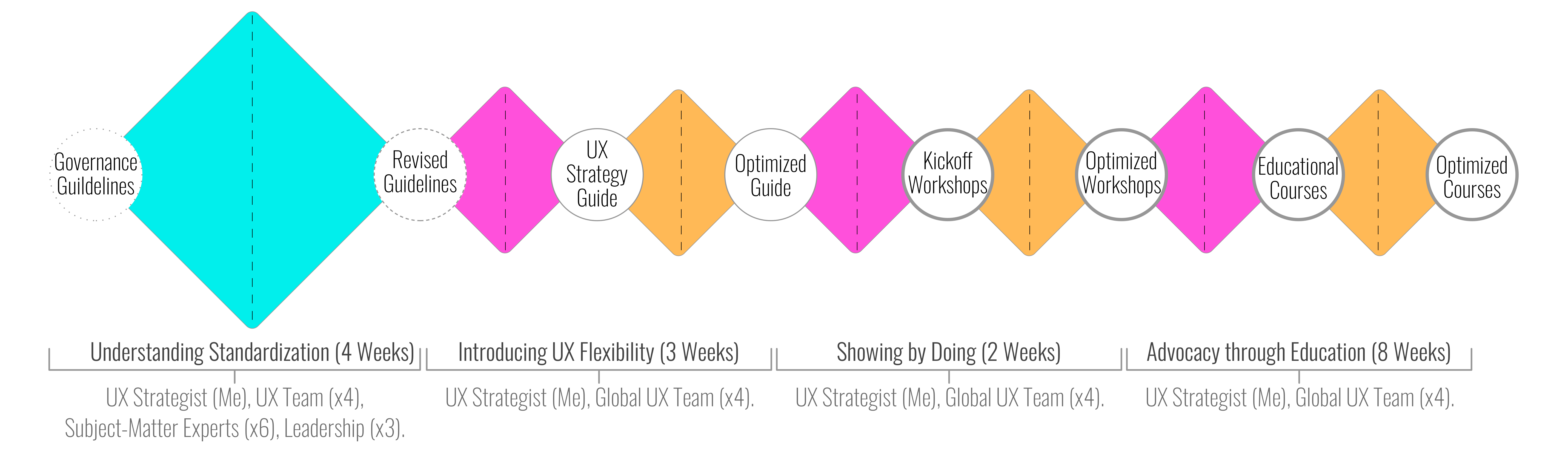
Approached by IT leadership to spearhead this cross-disciplinary best practices initiative, I began comprehensive research and relationship-building to surface:
Identified Issues:
-

Rapid Team Scaling took priority over Project Insights
Rushing to be efficient, many key project insights were missed (i.e. user research, regulatory planning), leaving software catalogue 95% untouched.
-

Difficult Stakeholder Management & Expectations
Blind adherence to established practices over project needs had normalized the expectation of increased delays, costs, and frustration.
-

Limited Cooperation created Confusion & Waste
Team members had little facilitation between disciplines, creating considerable ambiguity with project goals, regulatory requirements, and processes.
-

Lack of Strategic Regulatory & Design Resources
Teams wanted to find better ways to work, but tightly siloed disciplines made this cross-functional collaboration difficult to put into practice.
I compiled a comprehensive framework of strategies, critical design capabilities, and specific approaches into accessible guides, workshops, and curated courses for MedTech & Digital Health product teams across the organization.